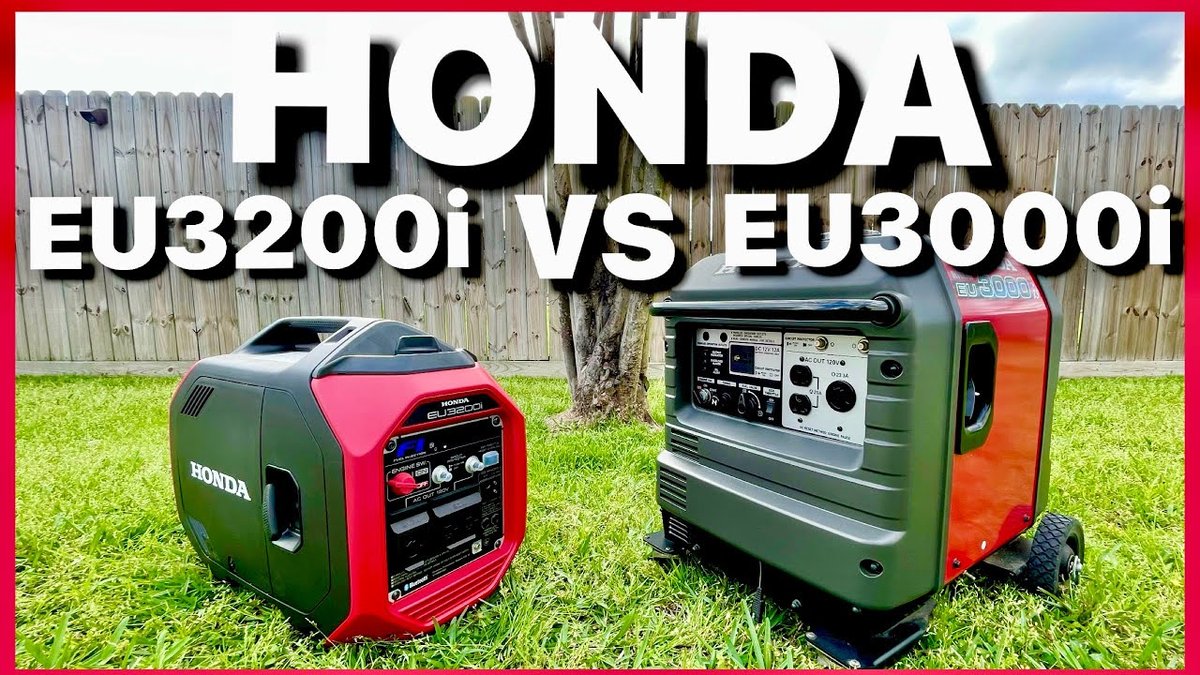
So, you're eyeing the Honda EU3000iS, a generator often lauded for its quiet performance, but you're also a savvy shopper, dissecting EU3000iS Comparisons & Alternatives to ensure you're making the absolute best investment. You're not alone. In a market brimming with options, finding the perfect portable power source means looking beyond brand loyalty and diving deep into the nitty-gritty of watts, decibels, and dollars. This guide cuts through the noise (pun intended) to give you the clear, actionable insights you need to power your adventures, projects, or peace of mind.
At a Glance: The Honda EU3000iS Snapshot
Thinking about the EU3000iS? Here’s a quick rundown of its key characteristics:
- Best For: RVs, camping (especially overnight), tailgating, light home backup, running sensitive electronics, and specific power tools.
- Key Pros: Exceptionally quiet (50-57 dBA), very long run time (up to 20 hours at 25% load), reliable electric start, clean power (low THD).
- Key Cons: High price tag, notably heavy (130.7 lbs/59.3 kg) requiring a wheel kit, and less powerful than some similarly priced alternatives.
- Capacity Sweet Spot: Comfortably runs a 10k BTU AC unit, an energy-efficient fridge, and a laptop simultaneously. Cannot handle a 15k BTU AC.
- Verdict: A premium choice for those prioritizing extreme quietness and extended operation, provided budget and portability aren't your absolute top constraints.
Why the Honda EU3000iS Captures Attention (And Why You're Here)
The Honda EU3000iS has carved out a distinct niche in the portable generator market. It's often the benchmark for "quiet power," a generator frequently discussed in RV parks, campgrounds, and off-grid communities. But what makes it so appealing, and why do so many people look to it as the solution, only to then seek out EU3000iS Comparisons & Alternatives?
At its heart, the EU3000iS embodies Honda's reputation for reliability and innovative engineering in its Super Quiet (EU) series. It’s a workhorse designed to blend into the background, providing steady power without dominating the soundscape of your campsite or tailgate party. This quiet operation, combined with its impressive fuel efficiency for extended run times, makes it incredibly attractive for overnight use where noise is a critical concern, such as keeping an RV air conditioner running through the night without disturbing neighbors.
However, its premium status comes with a premium price and a substantial physical footprint. This is where the quest for alternatives begins. Is the quiet worth the cost and the muscle required to move it? Are there other generators that hit a similar sweet spot, or perhaps prioritize different features that align better with your specific needs? Let's break down what you're getting with the EU3000iS before we pit it against its rivals.
The EU3000iS: A Closer Look at the Specifications
Before you can compare anything, you need a solid understanding of the baseline. The Honda EU3000iS isn't just a number; it's a carefully engineered piece of equipment with distinct characteristics. For a deeper dive into this model specifically, you might find our dedicated guide on Honda EU3000 generator details particularly useful.
Here's what powers the EU3000iS and how it stacks up on paper:
- Power Output: It delivers 2,800 running watts and 3,000 starting watts. This means it can maintain 2,800 watts continuously and handle momentary surges up to 3,000 watts when appliances kick on.
- Engine: A robust 196cc engine is at its core, designed for efficiency and durability.
- Noise Level: Perhaps its most celebrated feature, operating between 50 and 57 A-weighted decibels (dBA). To put that in perspective, 50 dBA is roughly equivalent to a quiet conversation or birds chirping.
- Run Time: Expect an impressive 19.6 to 20 hours at a 25% load on its 3.4-gallon (12.87 liters) fuel tank. This is outstanding for extended, unattended operation.
- Weight: This is often the sticking point: 130.7 lbs (59.3 kg). It's a heavy machine, almost certainly requiring an optional wheel kit for easy mobility.
- Dimensions: Its footprint is 25.9″ L x 17.6″ W x 22″ H, making it relatively bulky compared to more modern, compact designs.
- Oil Capacity: Takes 18 fluid ounces (0.53 liters) of oil.
- Outlets: Features three 120V AC outlets, but notably, no GFCI protection.
- Technology:
- Low THD (<3%): Provides exceptionally clean power, making it safe for sensitive electronics like laptops, smartphones, and medical equipment.
- CO Minder: An essential safety feature that monitors carbon monoxide levels and automatically shuts down the generator if unsafe levels are detected.
- Electric Start: Offers convenient push-button starting, complemented by a conventional pull-start as a backup.
- Fuel Gauge: A practical addition for monitoring fuel levels without guessing.
Real-World Capacity: What Can the EU3000iS Power?
Understanding the numbers is one thing, but knowing what those watts translate to in practical terms is another. The EU3000iS excels in handling specific loads, making it a versatile companion for many scenarios:
What it Can Power (Separately or in combinations):
- For the RV & Camping Enthusiast:
- A 10,000 BTU window air conditioner.
- Your RV's energy-friendly refrigerator.
- Lights, fans, and device chargers.
- A microwave for quick meals.
- A coffee maker.
- Combined example: You could comfortably run a 10,000 BTU window AC, an energy-efficient refrigerator, and a laptop simultaneously.
- For the DIYer & Tradesperson:
- A bench grinder (typically 1200-1500 running watts).
- A circular saw (1200-1500 running watts).
- Various smaller power tools like drills, jigsaws, and sanders.
- For Home Backup (Light Duty):
- A refrigerator and freezer.
- Lights and small electronics.
- A furnace fan (check specific wattage, but many are under 2000W).
- Medical devices requiring clean power.
What it Cannot Power:
- Large Air Conditioners: It cannot run a 15,000 BTU air conditioner. These typically require 3,300-3,500 starting watts, which exceeds the EU3000iS's 3,000 peak watts.
- Heavy-Duty Appliances: Don't expect to run multiple large, high-draw appliances like a well pump, electric water heater, or central air conditioning simultaneously. Its 2,800 running watts will quickly be overwhelmed.
- High-Surge Tools: While it handles some tools, specific high-amperage tools with very high starting demands might trip the breaker. Always check your tool's starting wattage.
The Honda Family Rivalry: EU3000iS vs. EU3200i
When you’re comparing Honda generators, the EU3200i often emerges as a direct, albeit different, sibling to the EU3000iS. They share the Honda nameplate and inverter technology, but their design philosophies diverge significantly, leading to distinct advantages for different users. This comparison is critical for anyone looking at EU3000iS Comparisons & Alternatives.
Let's look at the side-by-side:
| Feature | Honda EU3000iS | Honda EU3200i |
|---|---|---|
| Engine | 196cc | 130cc |
| Running Watts | 2,800 W (powers more appliances/tools) | 2,600 W |
| Starting Watts | 3,000 W | 3,200 W (more power for starting appliances) |
| Runtime (25%L) | Up to 20 hours (higher) | Max 8.6 hours |
| Fuel Efficiency (25%L) | 0.17 GPH | 0.14 GPH (more fuel-efficient, lower cost) |
| Noise | 50 dBA (quieter) | 54 dBA |
| Dimensions | L25.9" x W17.6" x H22" (bulkier) | L22.5" x W12" x H17.8" (more compact) |
| Weight | 130.7 lbs (heavier) | 59.1 lbs (lighter) |
| Starting System | Pull-start, Electric starter | Pull-start |
| EFI | No | Yes (enhances reliability, lowers fuel consumption, etc.) |
| Data Center | Fuel gauge | Yes, digital fuel gauge, better monitoring |
| Connectivity | No | My Generator mobile app |
| THD | <3% (safe for sensitive electronics) | <3% (safe for sensitive electronics) |
| Outlets | 3 AC, 120V, no GFCI | 3 AC, 120V, no GFCI |
| CO Monitoring | CO Minder | CO Minder |
Key Takeaways from the Honda Showdown:
- Power Profile: While the EU3000iS has higher running watts (2,800 vs. 2,600), the EU3200i boasts superior starting watts (3,200 vs. 3,000). This means the EU3200i is better equipped to start demanding appliances with high momentary surge requirements, even if its continuous output is slightly lower. If you're frequently starting a large RV air conditioner, the EU3200i might actually be more capable.
- Portability vs. Runtime: This is the most glaring difference. The EU3000iS, at a hefty 130.7 lbs, is clearly designed for less frequent movement or for applications where it stays put (e.g., mounted in an RV compartment). Its massive 20-hour runtime at 25% load is unparalleled for overnight use without refueling. The EU3200i, however, is a game-changer for portability at just 59.1 lbs – easily a one-person lift. The trade-off is a significantly shorter max runtime of 8.6 hours.
- Noise Level: The EU3000iS retains its crown as the quieter of the two, especially at lower loads. 50 dBA is noticeably softer than 54 dBA, which can make a real difference in quiet campgrounds or residential settings.
- Modern Features: The EU3200i leverages newer technology with Electronic Fuel Injection (EFI), which enhances reliability, improves cold starts, and contributes to its better fuel efficiency (0.14 GPH vs 0.17 GPH at 25% load). Its digital fuel gauge and "My Generator" mobile app connectivity also offer a more modern user experience and better monitoring capabilities.
- Starting System: Both have pull-start, but the EU3000iS offers the convenience of an electric start, a feature missing on the EU3200i.
Who wins? It's not about which is "better," but which is better for you. - Choose the EU3000iS if: You prioritize absolute quietness and exceptionally long, unattended run times above all else, and you don't mind the weight or will rarely move it once positioned.
- Choose the EU3200i if: You need superior portability, slightly better starting power for surges, and appreciate modern features like EFI and app connectivity, even if it means a bit more noise and shorter run times.
Beyond Honda: Exploring Other 3000-ish Watt Inverter Generators
When the Honda EU3000iS or EU3200i don't quite fit your budget or specific needs, a broader market of inverter generators awaits. While we can't deep-dive into every model from every brand, understanding what to look for when considering alternatives from other reputable manufacturers is key. The "3000-watt class" is highly competitive, and many brands offer compelling features that might make more sense for your specific situation.
Here's what to consider when looking at other brands:
1. The Budget-Friendly Contenders
Many brands offer inverter generators in the 3000-3500 watt range at significantly lower price points than Honda. Brands like Champion, Generac, Predator (Harbor Freight), and Wen are popular choices that offer a strong value proposition.
- Pros: Lower upfront cost, often include wheel kits and electric start as standard, good for occasional use or when budget is primary.
- Cons: Typically louder than Honda, might have shorter run times, potentially lower long-term reliability (though many have good warranties), and service networks may not be as extensive.
- What to look for:
- Power output: Ensure running and starting watts meet your needs.
- Noise level: Check dBA ratings carefully. A 60 dBA generator is noticeably louder than a 50 dBA unit.
- Features: Look for electric start, fuel gauge, low-oil shutdown, and CO monitoring.
- Reviews: Pay close attention to user reviews regarding reliability and customer service.
2. Performance-Oriented Rivals
Some brands aim to compete more directly with Honda on features and quality, though often still at a slightly lower price point. Yamaha, for instance, is well-regarded for its quiet and reliable inverter generators, often considered a close second to Honda.
- Pros: Excellent build quality, often very quiet, good fuel efficiency, strong reliability.
- Cons: Still a significant investment, although often less than Honda.
- What to look for:
- Similar specs: If you like the EU3000iS's quietness and run time, seek alternatives that boast similar numbers.
- Brand reputation: Look for brands with a history of quality and customer satisfaction in the inverter generator space.
3. Feature-Rich Innovators
The market constantly evolves, with some brands integrating new technologies or unique features. This might include parallel capability (connecting two smaller generators for more power), advanced digital displays, or smart controls.
- Pros: Potentially more versatile, cutting-edge technology, user-friendly enhancements.
- Cons: New features can sometimes mean new points of failure; long-term reliability might be less proven.
- What to look for:
- Relevant innovations: Do the extra features genuinely benefit your use case?
- Integration: How well are these features integrated into the overall design and user experience?
Key Decision Factors When Choosing Your 3000-Watt Class Generator
Navigating the landscape of EU3000iS Comparisons & Alternatives boils down to prioritizing what matters most to you. Here are the critical factors to weigh:
1. Your Budget: The Ultimate Gatekeeper
Let's be blunt: the EU3000iS is expensive. If your budget is tight, even its exceptional features might not justify the cost. Define your maximum spend, and then see what features are available within that range. Remember to factor in potential accessories like a wheel kit (essential for the EU3000iS) or an RV adapter.
2. Portability: Heavyweight Champion or Featherlight Friend?
At 130.7 lbs, the EU3000iS isn't "portable" in the way a 50-pound unit is. It requires effort, a wheel kit, or a dedicated spot.
- Ask yourself: Will you be moving this generator frequently? Will you need to load it into a vehicle alone? If portability is paramount, lighter alternatives (like the EU3200i or other brands in the 50-80 lb range) should be at the top of your list. If it's mostly staying put, weight becomes less of a concern.
3. Noise Level: The Sound of Silence (or a Subtle Hum)
For many, this is where the EU3000iS shines brightest. 50 dBA is genuinely quiet. Every 3 dBA increase roughly doubles the perceived noise level.
- Consider your environment: Are you camping in a quiet park? Do you have close neighbors? Will you be running it overnight? If you need the quietest generator possible, the EU3000iS is hard to beat. If a little more hum is acceptable, you open up many more options.
4. Run Time: All-Night Power or Quick Bursts?
The EU3000iS's near 20-hour run time at quarter load is fantastic for overnight operations without interruption.
- Assess your needs: Do you need continuous power for extended periods, like keeping an RV cool all night, or running critical medical equipment? Or are your power needs more intermittent, for a few hours at a tailgate or a job site? Longer run times often come with larger fuel tanks and heavier units.
5. Power Requirements: Running vs. Starting Watts
Don't just look at the peak or starting watts. Understand both:
- Running watts: The continuous power your appliances need.
- Starting watts: The momentary surge required to kick-start motors (like those in refrigerators or air conditioners).
- The EU3000iS (2800 running / 3000 starting) is good for continuous loads.
- The EU3200i (2600 running / 3200 starting) is better for high-surge starting.
- Calculate your needs: List all the appliances you plan to run simultaneously, noting both their running and starting watts. This will tell you the minimum generator size you truly need.
6. Features and Connectivity: Modern Conveniences
Beyond the basics, features like electric start, EFI, digital displays, fuel gauges, and app connectivity enhance the user experience. CO Minder is now standard on most reputable generators and a non-negotiable safety feature.
- Prioritize convenience: Is push-button start a must-have? Do you want to monitor your generator from your phone? Consider if these modern touches justify any price difference.
7. Brand Reputation & Service Network
Honda's reputation for reliability and its extensive service network are significant advantages.
- Think long-term: How important is easy access to parts, service, and a strong warranty? For a significant investment, peace of mind regarding after-sales support can be invaluable.
Common Questions & Misconceptions About the EU3000iS and Its Class
Let's clear up some frequent queries to help refine your choice.
Q: Can I parallel two EU3000iS generators for more power?
A: No, the Honda EU3000iS does not have parallel capability. If you need more power than a single 3000-watt generator can provide, you would need to buy a larger single unit or consider two smaller generators designed for parallel operation (like the EU2200i).
Q: Is the EU3000iS safe for sensitive electronics?
A: Yes, absolutely. With less than 3% Total Harmonic Distortion (THD), the EU3000iS produces very clean power, making it perfectly safe for laptops, smartphones, medical devices, and other sensitive electronics. Most inverter generators today offer this low THD.
Q: Does the EU3000iS come with a wheel kit?
A: No, the wheel kit is an optional accessory and must be purchased separately. Given its 130.7 lbs weight, it's almost essential for anyone who plans to move the generator more than a few feet.
Q: Why is the EU3000iS so much heavier than the EU3200i?
A: The weight difference primarily comes from the larger engine (196cc vs 130cc) and significantly larger fuel tank (3.4 gallons vs. an integrated tank that isn't explicitly detailed but allows for much shorter run times on the EU3200i). These components are necessary for the EU3000iS's higher running wattage and exceptional run time.
Q: Is it worth paying more for a Honda when other brands offer similar power for less?
A: This is the core question when considering EU3000iS Comparisons & Alternatives. Honda's premium often buys you industry-leading quietness, legendary reliability, excellent fuel efficiency, and a robust service network. For some users (e.g., full-time RVers, those in very quiet areas), these benefits are well worth the extra cost. For others, particularly those on a tighter budget or with less demanding noise requirements, the cost savings of another reputable brand might be a more practical choice.
Making Your Choice: A Path Forward
Choosing the right generator from the array of EU3000iS Comparisons & Alternatives isn't about finding a "winner" in a head-to-head battle, but about aligning a generator's capabilities with your specific demands and priorities.
Start by being brutally honest about your budget and your most critical needs:
- If absolute quietness and maximum uninterrupted run time are your non-negotiables, and the weight (with a wheel kit) isn't a deal-breaker, the Honda EU3000iS remains an excellent, albeit premium, choice. It's built for those long, peaceful nights where silence is golden.
- If portability, modern features, and strong starting power are more appealing, even with a slight increase in noise and reduced run time, the Honda EU3200i offers a compelling upgrade in design and convenience. It represents a significant shift in Honda's approach to the 3000-watt class.
- If budget is your primary concern, or you need specific features like more starting power for less money, explore reputable alternatives from other brands. Be diligent in comparing specs like noise, run time, and included features (like wheel kits or electric start) to ensure you're getting true value.
Ultimately, your ideal generator is the one that flawlessly fits into your lifestyle, provides reliable power when you need it, and doesn't leave you regretting your investment. Arm yourself with this knowledge, weigh your priorities, and choose confidently.